
A short history of the village
The name Melleran comes from honey (mel in Latin), which was harvested from the village’s large chestnut trees in Gallo-Roman times.
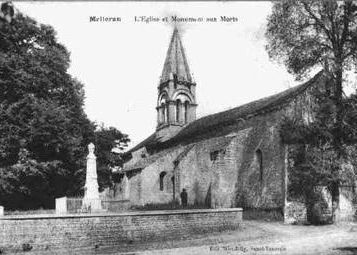
The Église Notre-Dame was built in the 12th century and transformed many times during the Gothic period (14th and 15th centuries); it was listed as a historical monument in 1913. It overlooks a large square shaded by lime and chestnut trees, once a meeting place known for its mule fairs.
A castle was built in the 16th century; it was later destroyed and its stones were used to surface the local paths. A vaulted cellar is all that remains today. There was also a central pond used to water the animals; it was filled in during the 1970s and turned into a wooded green.